Pajama Paralysis
Notes from the Margins

Pajama Paralysis. An actual NHS poster.
The idea is simple enough: when patients stay in bed, in their pyjamas or a hospital gown all day, they can become less mobile, less independent, less confident, and more stuck.
It is not really about pyjamas. It is about what the pyjamas can start to represent. Bed. Illness. Waiting. Passivity. A day that never quite begins.
The campaign message was basically get up, get dressed and get moving. Where clinically appropriate, obviously. Nobody is dragging 80 year old Betty out of bed post fall because a sign has said so.
Because getting dressed is not just about getting dressed. It’s about orientation. It’s about dignity. It’s the routine. It’s telling your brain we are participating in the day.
This morning my own brain had filed a formal complaint to whomever it files to. I had what I describe as a mild Menty B
Not a full Victorian fainting episode. No one needed to bring smelling salts or loosen my corset. But enough of a wobble that the day felt like it had become too loud before it had even started.
I was overtired. Work hours had finally caught up with me. There were things I was naturally overthinking about. Stress and worry were doing a little tap dance.
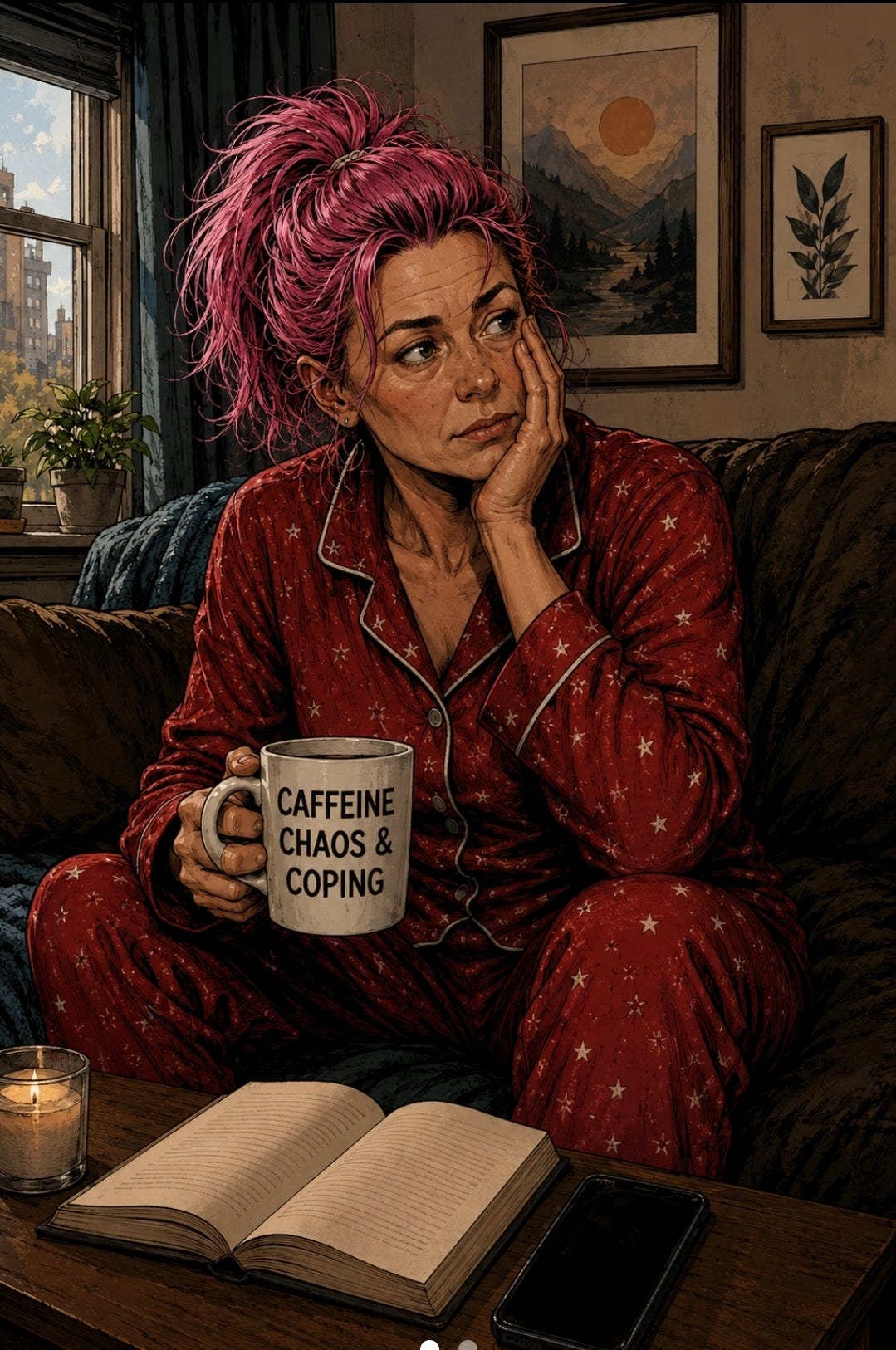
Also, I don’t really like being off at weekends!. Why?, because weekends contain all the people. Too many people.
People in shops. People on paths. People in car parks. People standing in the exact place I need to be. People not at work.
And then there is perimenopause, obviously.
Perimenopause does not cause my problems, but it does enjoy being in the back, adding unnecessary factors.
Tired? Let’s make it emotional.
Worried? Let’s add sweating.
Making a decision? Have a little brain fog.
Problems? You can’t find an airpod, now that’s a real problem. Go rage!.
So there I was.
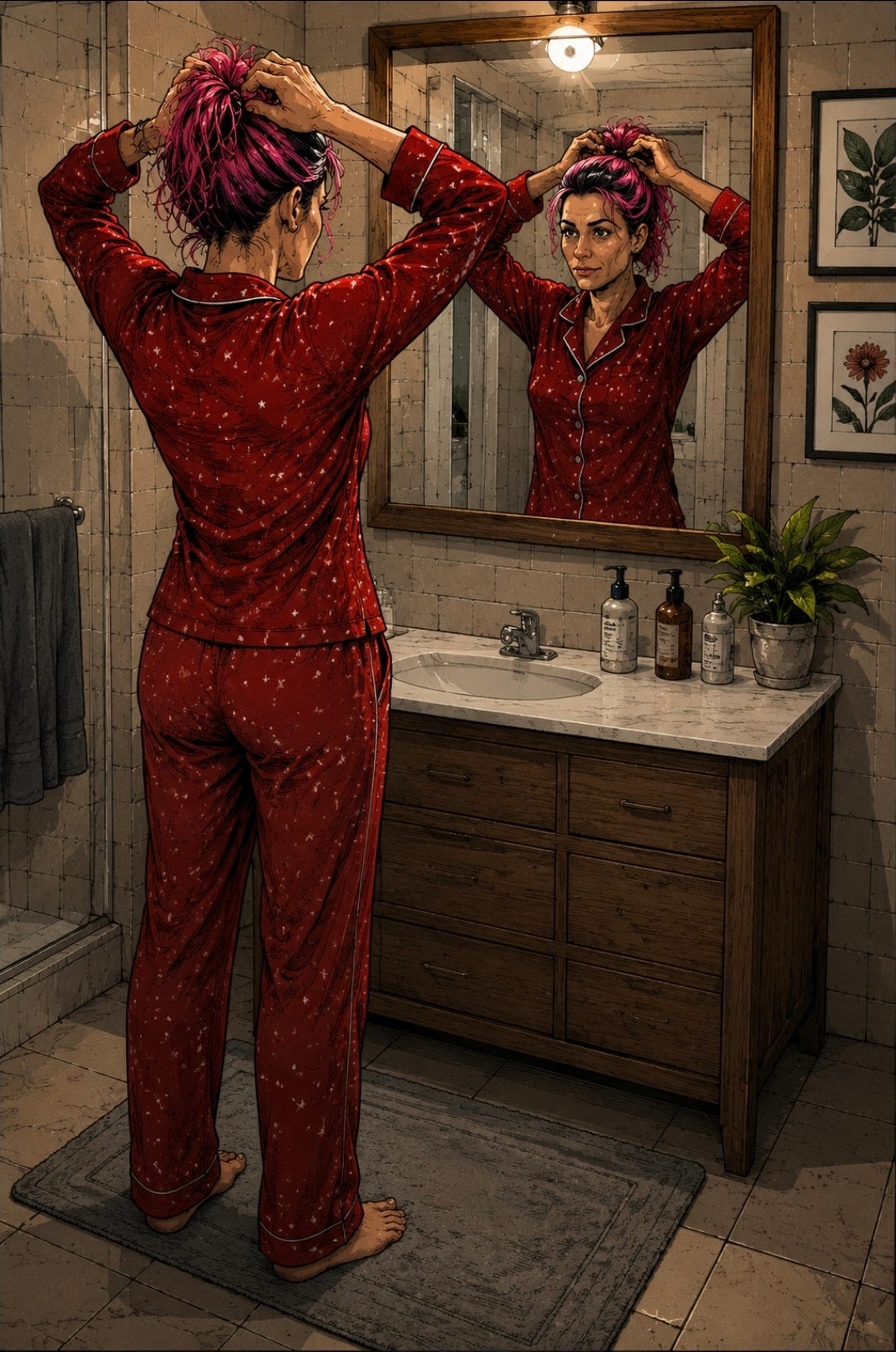
In my pyjamas. My red ones. Quite nice, actually, a Christmas present. Which is part of the problem. Comfort. Familiarity.
Pyjamas that say, “Why would you go outside when you could remain here and linger like an sick ailing victorian child”.
Pajama paralysis.
Not the ward version. Not the older patient at risk of deconditioning version. Not the official Nhs campaign version.
The at home version.
The “if I do not get dressed soon, this day is going to disappear into tea, doom scrolling, snacks and regrets” version.
The “I am not unwell enough to do nothing, but I am overwhelmed enough that everything feels too much” version.
In hospital, we know that getting dressed can change how someone sees themselves. A person in a hospital gown can feel like a patient. A person in their own clothes may remember they have a life to get back to.
At home, it can be similar.
There is a point where pyjamas stop being cosy and start becoming containment. A warm, cosy, soft, fleecy holding pen.
So I did the thing. Eventually.
I got dressed. Not with inspirational music swelling in the background of a wellness influencer. And once I was dressed, the next thing became less impossible.
Thirty minutes of Body Balance yoga. Breathing. Stretching. Reminding my shoulders they do not live around my ears.
Then, if I feel like it, i’ll go for a short ride. Nothing epic. No grand adventure. No pretending I am suddenly training for the Tour de Lancashire. Just a spin before returning to work tomorrow.
Because sometimes you just need to:
Get yourself dressed
Brush your teeth, your hair
Do half an hour of yoga
Make yourself something good to eat
Move your body gently before it reslises
Go outside before your brain can object
I think that is what I like about the phrase pyjama paralysis. It sounds daft, but it understands something important.
We are affected by whether we have moved, washed, eaten, slept, spoken to anyone, or seen daylight.
And when you work in healthcare, you know this. You see it in patients all the time. You see how quickly people can lose confidence.
How bed becomes the safest place. How “I’ll just stay here for now” becomes “I don’t think I can.”
How much difference it can make when someone is washed, dressed, sat out, and spoken to like themselves again.
But knowing it professionally does not mean you always apply it personally.
Healthcare workers are terrible for this.
We will encourage everyone else to pace themselves, hydrate, mobilise, rest properly, accept help, and be kind to themselves.
Then we go home and survive on caffeine, biscuits, three hours of sleep and have the emotional resilience of a wet paper bag.
If the day feels impossible, reduce the size of the first step.
Do not try to fix your life.
Do not try to sort your entire future.
Don’t try to solve work, hormones, money, ageing, fitness, family problems.
Or why the pipes are making that loud banging noise
Just get dressed. Then see what happens.
Because pajama paralysis is real.